Deposition Interpreting Services in Orlando, Florida
What a Deposition Interpreter Does

A deposition interpreter is a trained language professional who renders everything said on the record from one language into another, so that a witness who does not speak English can testify in their own language and counsel can examine them in theirs. The interpreter is there for the record, not for either side.
Almost all deposition work is consecutive interpreting, which means the speaker says a segment, stops, and the interpreter renders it. It is slower than the alternative, and that is the point: it produces a clean, sequential record that a reporter can take down and that a court can later read without ambiguity.
The distinction that causes the most confusion when firms book this work is between interpreting and translating. They are different disciplines, performed by different professionals, and a person qualified in one is not automatically qualified in the other.
Consecutive Interpreting
Consecutive interpreting is spoken interpreting in which the speaker pauses and the interpreter renders each segment in turn. This is the standard mode for depositions, examinations, and witness testimony, because it produces a clear sequential record.
Simultaneous Interpreting
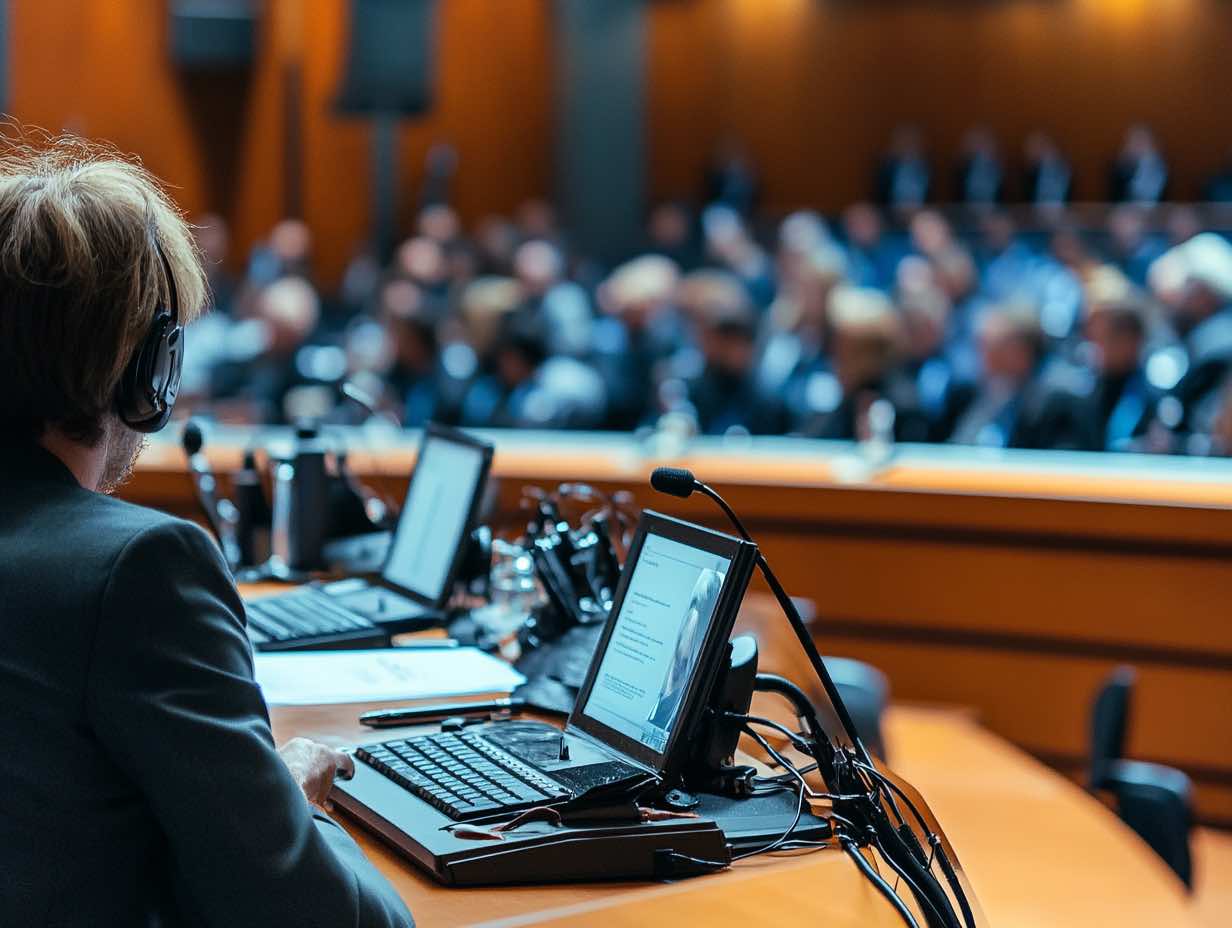
Simultaneous interpreting is spoken interpreting delivered in real time while the speaker continues, usually through headsets. It is standard for conferences and for a party following proceedings, and is rarely used for the question-and-answer portion of a deposition.
Translation
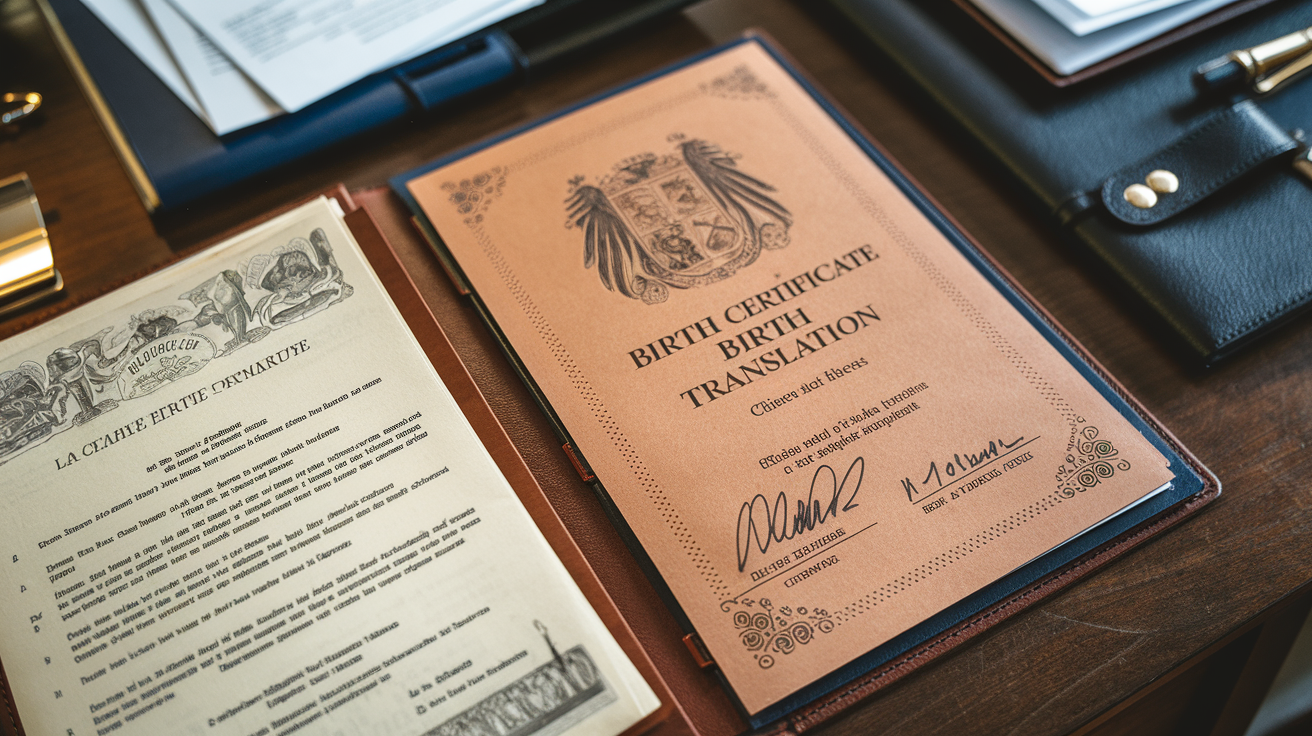
Translation is the rendering of written text from one language into another. Exhibits, contracts, and records are translated. Testimony is interpreted. The two are separate professions with separate credentials.
The Rule That Applies When You Retain the Interpreter

Most discussion of court interpreters concerns appointment by the court. Depositions usually work the other way round: counsel retains the interpreter. Florida has a rule for that situation specifically, and it is the one worth knowing.
Florida Rule of General Practice and Judicial Administration 2.565 provides that when an attorney or a self-represented litigant retains an interpreter, that interpreter must, if possible, be certified, language skilled, or provisionally approved as those terms are defined in the Florida Rules for Certification and Regulation of Spoken Language Court Interpreters, with preference given to certified and language skilled interpreters. The companion rule, 2.560, governs appointment by the court and sets out the same order of preference before a registered or nonregistered interpreter may be used.
In practice this gives you a checkable standard rather than a vague one. You can ask which designation an interpreter holds, and the answer is a matter of public record with the Florida Court Interpreter Certification and Regulation Program, administered by the Office of the State Courts Administrator.
Florida Courts: Court Interpreting →
Ask for the designation, not the description
Certified, language skilled, and provisionally approved are defined terms under the Florida rules. Fluent, native, and experienced are not. Ask which of the defined designations the interpreter holds for the language you need.
Confirm it covers the language pair you are booking
A designation is language-specific. An interpreter certified in Spanish holds no designation in Haitian Creole. Where a language has no state designation available, ask what qualification and subject experience stand in its place.
Match the interpreter to the subject, not only the language
An orthopaedic independent medical examination, a construction defect deposition, and a workers' compensation hearing each carry their own terminology. Tell us the subject when you book so the interpreter can be matched to it.
Send the exhibits ahead of the date
Names, place names, product names, and technical terms are what slow a deposition down. An interpreter who has seen them in advance prepares for them, which is time you do not spend on the record.
What an Interpreter May Not Do
This is where bilingual depositions most often go wrong, and it is worth stating plainly, because the boundary is not a matter of house style. It is written into the rules that govern Florida court interpreters.
The Code of Professional Conduct in the Florida Rules for Certification and Regulation of Spoken Language Court Interpreters, at rules 14.300 to 14.390, requires that interpreters limit themselves to interpreting or translating, and provides that they must not give legal advice, express personal opinions to the people for whom they are interpreting, or engage in any other activity that could be construed as a service other than interpreting or translating while serving as an interpreter. The same code requires interpreters not to interject their own words or expressions, and to ask the court's permission if an interpreting problem genuinely needs to be explained.
What that means in the room is narrow and specific.
- ✓The interpreter does not summarise, condense, or tidy an answer. A rambling answer is interpreted as a rambling answer.
- ✓The interpreter does not explain a question to the witness, or advise the witness how to respond.
- ✓The interpreter does not have side conversations with the witness, with counsel, or with anyone else in the room.
- ✓The interpreter does not take testimony, administer the oath, or make the record. Those belong to the officer.
- ✓The interpreter does not act as a cultural expert or offer opinions about what the witness meant.
Florida Code of Professional Conduct for court interpreters (PDF) →
The Interpreter Is Not the Court Reporter
These are two separate roles, filled by two separate people, and a bilingual deposition needs both.
Under Florida Rule of Civil Procedure 1.310(c), the officer before whom the deposition is taken puts the witness under oath and records the testimony, personally or by someone acting under the officer's direction and in the officer's presence. Where the deposition is taken by communication technology, the oath is administered as provided in Florida Rule of General Practice and Judicial Administration 2.530. That role is the reporter's, and the transcript is theirs.
MVP Translations provides the interpreter. We do not provide court reporters, and we do not take the record. Your firm or your reporting agency arranges the officer, and we work alongside them on the day. Firms sometimes ask whether one person can do both, and the answer is no: the officer is recording testimony while the interpreter is producing it, and the two jobs cannot be held by the same person at the same time.
How a Bilingual Deposition Runs
The sequence below is what a well-run bilingual deposition looks like from the point the date is set. Most of the work that determines whether the day goes smoothly happens before anyone sits down.
- BookingLanguage, subject, date, and mode
You tell us the language and dialect, the subject matter, the date and expected length, and whether the deposition is in person or by communication technology. Pete handles scheduling and comes back with a quote.
- BeforePreparation and materials
We match a qualified interpreter to the subject and send them any exhibits, name lists, or terminology you can share, under the same confidentiality obligations that apply to the deposition itself.
- On the dayThe oath and the record
The interpreter arrives ahead of the start, is sworn on the record, and interprets consecutively for the duration. The officer administers the oath and takes the record.
- AfterFollow-up and exhibits
If exhibits or the resulting audio need written translation or transcription afterwards, that is separate work by a certified human translator or transcriber, quoted separately.
Planning the Day: Length, Breaks, and Team Interpreting
Interpreting is cognitively demanding work, and accuracy falls away with fatigue before the interpreter notices it happening. This is documented rather than anecdotal. The National Association of Judiciary Interpreters and Translators, in its position paper on team interpreting, reports that mental fatigue begins to set in somewhere between 45 minutes and 2 hours of simultaneous interpreting, depending on the speed and difficulty of the speakers and the conditions in the room, and that once cognitive fatigue is reached the interpreter's own ability to self-monitor and self-correct is compromised.
Deposition work is consecutive rather than simultaneous, which is less punishing minute for minute, but a full-day deposition is still a long stretch of sustained concentration. Two things follow for scheduling. Build real breaks into the day rather than working through, and for long or high-stakes matters, consider a team of two interpreters who rotate at set intervals. It costs more than a single interpreter and it protects the record, which is usually the more expensive of the two things to get wrong.
It is also worth setting expectations on length at the point you serve the notice. Consecutive interpreting means every question and every answer is spoken twice. A deposition that would take a morning in English does not take a morning when it is interpreted.
What Goes Wrong, and How We Handle It

After deposition work across Central Florida since 2009, the problems repeat. None of these are exotic, and all of them are cheaper to prevent than to fix on the record.
The witness answers in English
A witness with partial English begins answering questions before they are interpreted, or switches between languages mid-answer. The record becomes inconsistent, and on review it is unclear which answers were interpreted and which were not.
Solution: The interpreter states on the record that the witness has answered in English, and continues to interpret every question. Counsel can then decide how to proceed. What the interpreter does not do is decide for the room, or quietly stop interpreting.
The dialect is not the one booked
A language is booked by name and the witness speaks a regional variety the interpreter is not confident in. Portuguese as spoken in Brazil and in Portugal, or Spanish across different countries, can diverge on exactly the everyday vocabulary a deposition turns on.
Solution: We ask for country and region at the point of booking, not on the day. Where a variety needs a specific interpreter, we source one. Where an issue only becomes apparent during the deposition, the interpreter raises it on the record rather than guessing.
The interpreter cannot attend
Illness, a traffic incident, or a matter running long elsewhere can put a booked interpreter out of reach, sometimes on the morning of the deposition.
Solution: We source a replacement interpreter on a rush basis and tell you immediately where things stand. Because we have worked with interpreters across Central Florida since 2009, we are drawing on a real network rather than a directory. What we will not do is tell you it is covered before it is.
Exhibits arrive in another language
A document in the witness's language is handed across the table and counsel asks the interpreter to read it into the record on the spot. This is sight translation, it is unprepared, and it is where errors enter transcripts.
Solution: Send foreign-language exhibits ahead of the deposition for written translation by a certified human translator, delivered with a Certificate of Accuracy. Where something genuinely arrives on the day, the interpreter notes on the record that it is an unprepared sight translation.
The remote audio is not good enough
Remote depositions fail on sound rather than on video. Overlapping speech, a poor microphone, or a participant on speakerphone make accurate interpreting impossible.
Solution: We ask for a short technical check before the start and for participants to use headsets. During the deposition, the interpreter says so on the record when something is inaudible rather than reconstructing it. An interpreter who guesses is a worse problem than a pause.
Credentials, and What They Actually Cover
Credentials in this field are narrower than they sound, and knowing what each one covers saves a conversation later.
At federal level, the Court Interpreters Act at 28 U.S.C. 1827 directs the Administrative Office of the United States Courts to certify court interpreters, and the resulting Federal Court Interpreter Certification Examination is available in Spanish. Certification programmes in Haitian Creole and Navajo were previously offered and are no longer available. So for the great majority of languages, no federal certification exists to hold, and an offer of a federally certified interpreter in a language other than Spanish should be questioned.
At state level, Florida's designations of certified, language skilled, and provisionally approved are the ones rules 2.560 and 2.565 refer to, administered through the Office of the State Courts Administrator. For written work, certification by the American Translators Association is a translation credential covering specific language pairs, and is not an interpreting credential.
MVP Translations was founded in 2009 by Milton Palacio, a Certified Court Interpreter and United States Navy veteran. The distinction that matters for a firm booking a deposition is that the person you are dealing with does this work himself, and will tell you when a language or a date is genuinely difficult to cover instead of accepting the booking and hoping.
Booking a Deposition Interpreter in Orlando
We provide interpreters for depositions, examinations under oath, independent medical examinations, arbitrations, hearings, and recorded statements across Orlando and Central Florida, in Spanish, Haitian Creole, Portuguese, and more than 150 other language combinations, as part of our legal interpreting services in Orlando. We also provide deposition interpreters for cases elsewhere in Florida and in other states, on-site or by video. Outside depositions, see interpreting for examinations under oath and arbitration, or conference and event interpreting for meetings and conferences. Translation of exhibits is handled through our certified translation services in Orlando, and transcription of existing audio by certified human professionals, never by machine translation.
Give us the date, the language and country, the subject matter, and whether the deposition is in person or remote. Pete handles scheduling and quotes during office hours, which are eight in the morning to seven in the evening, Monday to Friday, with on-call cover outside them.
Frequently Asked Questions
Florida Rule of General Practice and Judicial Administration 2.565 provides that an interpreter retained by an attorney or a self-represented litigant must, if possible, be certified, language skilled, or provisionally approved as defined in the Florida Rules for Certification and Regulation of Spoken Language Court Interpreters, with preference given to certified and language skilled interpreters. Ask which designation an interpreter holds for the specific language you are booking, because designations are language-specific.
No. Under Florida Rule of Civil Procedure 1.310(c), the officer before whom the deposition is taken administers the oath and records the testimony. The interpreter is producing the testimony in the other language at the same moment the officer is recording it, so the two roles cannot be held by one person. MVP Translations provides the interpreter. We do not provide court reporters.
Depositions are interpreted consecutively, which means every question and every answer is spoken twice, once in each language. A bilingual deposition therefore runs materially longer than the same deposition conducted in English. Allow for that when you serve the notice, book the room, and schedule the reporter, and build in real breaks rather than working straight through.
We source a replacement interpreter on a rush basis and tell you where things stand as soon as we know. Because MVP Translations has worked with interpreters across Central Florida since 2009, we are drawing on established relationships rather than a directory listing. We will not tell you a date is covered until it is.
No. The Code of Professional Conduct in the Florida Rules for Certification and Regulation of Spoken Language Court Interpreters requires interpreters to limit themselves to interpreting or translating, and bars them from giving legal advice or expressing personal opinions. If a term has no clean equivalent or an answer is ambiguous, the interpreter says so on the record and asks to address it, rather than supplying an interpretation of the witness's meaning.